
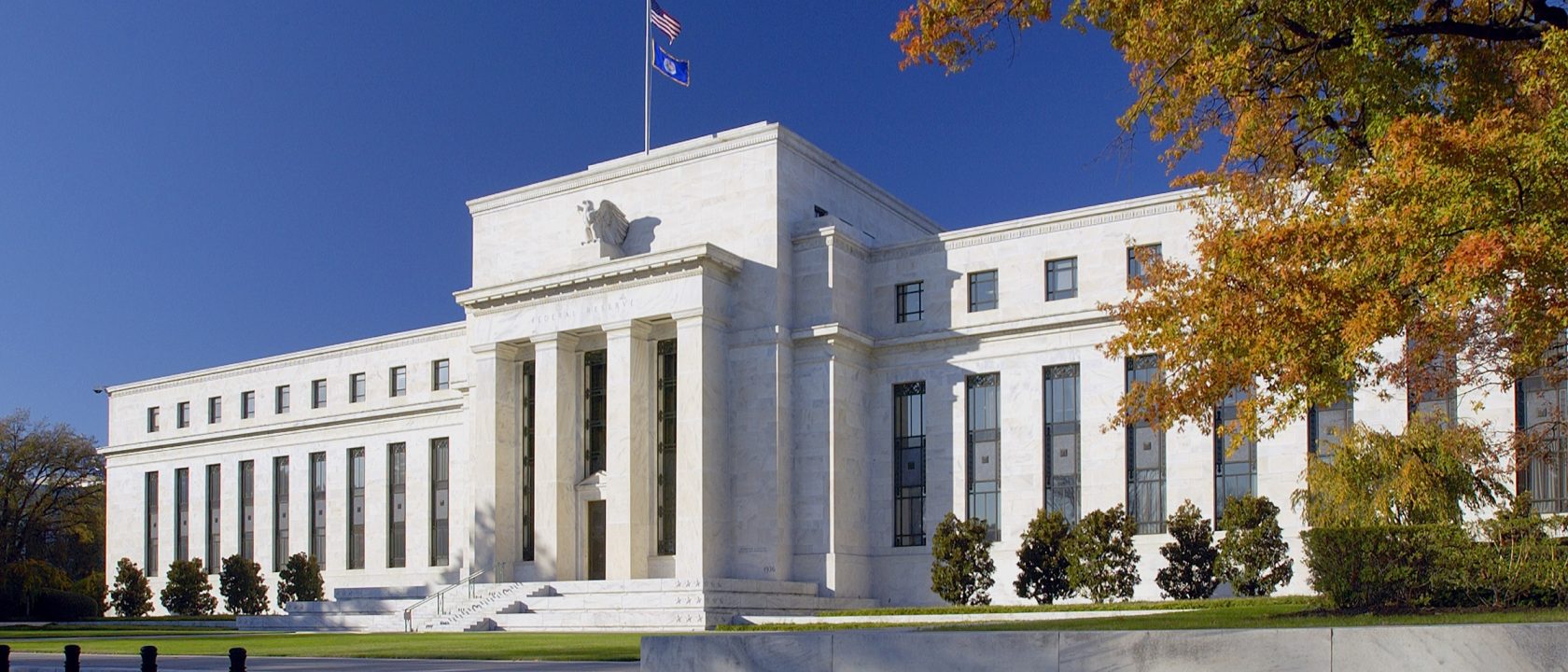
The Federal Reserve on Sept. 30 finalized two rules overhauling its annual bank stress test, the latest finished piece of a broader rewrite of how much capital U.S. banks must hold. The larger pieces are still pending: three proposals from March that would replace the 2023 Basel III endgame plan, recalibrate the surcharge on the biggest banks and lower risk weights for ordinary lending.
Vice Chair for Supervision Michelle Bowman has now put a date on them. In a Sept. 18 speech in London she said she expects the Board to finalize those reforms “before the end of this year.” If she is right, the capital rules that have been fought over since 2023 will be settled in the next 12 weeks, in a direction that lowers requirements rather than raising them.
1. What was proposed in March
On March 19, the Fed, the FDIC and the OCC issued three proposals, and the 2023 Basel III endgame proposals were withdrawn. The Fed Board approved the package 6–1, with Governor Michael Barr dissenting. Comments closed June 18.
While the agencies anticipate that the amount of overall capital in the banking system would modestly decrease as a result of these proposals, capital levels would still be substantially higher than they were before the financial crisis.
EXCERPT · Joint press release, Federal Reserve, FDIC and OCC, March 19, 2026
The first proposal gives the largest banks a single “expanded risk-based approach” in place of today’s two parallel calculations. The second rewrites the standardized approach used by everyone else, cutting the risk weight on corporate exposures from 100% to 95% and introducing loan-to-value-based weights for mortgages. The third, from the Fed alone, recalibrates the surcharge on global systemically important banks and indexes it to economic growth and inflation.
2. The numbers
| Bank group | Estimated change in CET1 capital requirements |
|---|---|
| Category I and II (largest banks), all proposals incl. stress test changes | −4.8% |
| of which: Basel III proposal | +1.4% |
| of which: GSIB surcharge proposal | −3.8% |
| Category III and IV ($100 billion to $700 billion), incl. stress test changes | −5.2% |
| Banks under $100 billion (standardized approach changes) | −7.8% |
The Basel III piece on its own would modestly raise requirements for the biggest banks. The surcharge and stress test changes more than offset it. Barr put a dollar figure on the combined effect: counting recent changes to the enhanced supplementary leverage ratio, tier 1 capital requirements for the GSIBs would fall 6.0%, or $60 billion. He called the reductions “unnecessary and unwise.”
The Basel III rule itself adds capital. Everything around it subtracts more.
3. The fight
Supporters frame the package as fixing overlap and miscalibration. The agencies argue that some requirements double-count the same risks, and that current rules discourage banks from originating and servicing mortgages. The proposal would end the deduction of mortgage servicing assets from common equity, assigning them a 250% risk weight instead, and smaller banks would see the largest proportional relief.
Critics focus on the GSIB surcharge. Barr’s statement objects to recalibrating the short-term wholesale funding component to 20% of method 2 scores, noting that it has actually accounted for about 30% because the largest banks rely on that funding more than the Board expected. His reading is that the finding argues for more capital, not less. He also flagged what he called “over 20 material downward deviations from the Basel III standard.”
One provision cuts the other way. Category III and IV banks would have to recognize most elements of accumulated other comprehensive income, including unrealized securities losses, in regulatory capital, phased in over five years. Unrealized securities losses were central to the 2023 regional bank failures, and this tightening survives inside an otherwise deregulatory package.
4. The stress test piece is done
The Sept. 30 rules require the Board to seek public comment each year on stress test scenarios and material model changes, and they adopt the models for the 2027 test. Firms with large trading books will face two global market shocks a year, with the worse one counting. Starting in 2028, the stress capital buffer will be based on the average of the two most recent tests, which should damp year-to-year swings in requirements.
Bowman framed the effort in London as closing the book on “an opaque and unnecessarily unpredictable framework.” For banks, the more concrete payoff is predictability: lower and steadier buffers make it easier to plan dividends and buybacks. For critics, a more predictable test is also an easier one to manage around.
5. What happens next
- Oct.–Dec. 2026: final rules on Basel III, the standardized approach and the GSIB surcharge, if Bowman’s timeline holds. The Fed must act with the FDIC and OCC on the joint rules.
- Nov. 4: extended comment deadline on the Fed’s separate proposal to modernize Regulation O, its rule on loans to bank insiders.
- 2027: the first stress test run under the new transparency rule and the published models.
- 2028: stress capital buffers begin averaging two years of results.
- Agencies request comment on proposals to modernize the regulatory capital framework (March 19, 2026) — Federal Reserve Board · federalreserve.gov
- Board memo: Basel III, GSIB surcharge and standardized approach proposals — Federal Reserve Board · federalreserve.gov
- Statement on Bank Capital Proposals by Governor Michael S. Barr — Federal Reserve Board · federalreserve.gov
- The Final Chapter on Modernizing Bank Regulatory Stress Testing (Bowman, Sept. 18, 2026) — Federal Reserve Board · federalreserve.gov
- Federal Reserve Board finalizes changes to its stress test (Sept. 30, 2026) — Federal Reserve Board · federalreserve.gov
- Fact sheet: Proposals to Modernize the Regulatory Capital Framework — Federal Reserve Board · federalreserve.gov
gov.house is independent and is not affiliated with any government body. This file is journalism, not investment, tax or legal advice. How we work: ethics & standards · Spotted an error? Corrections.