
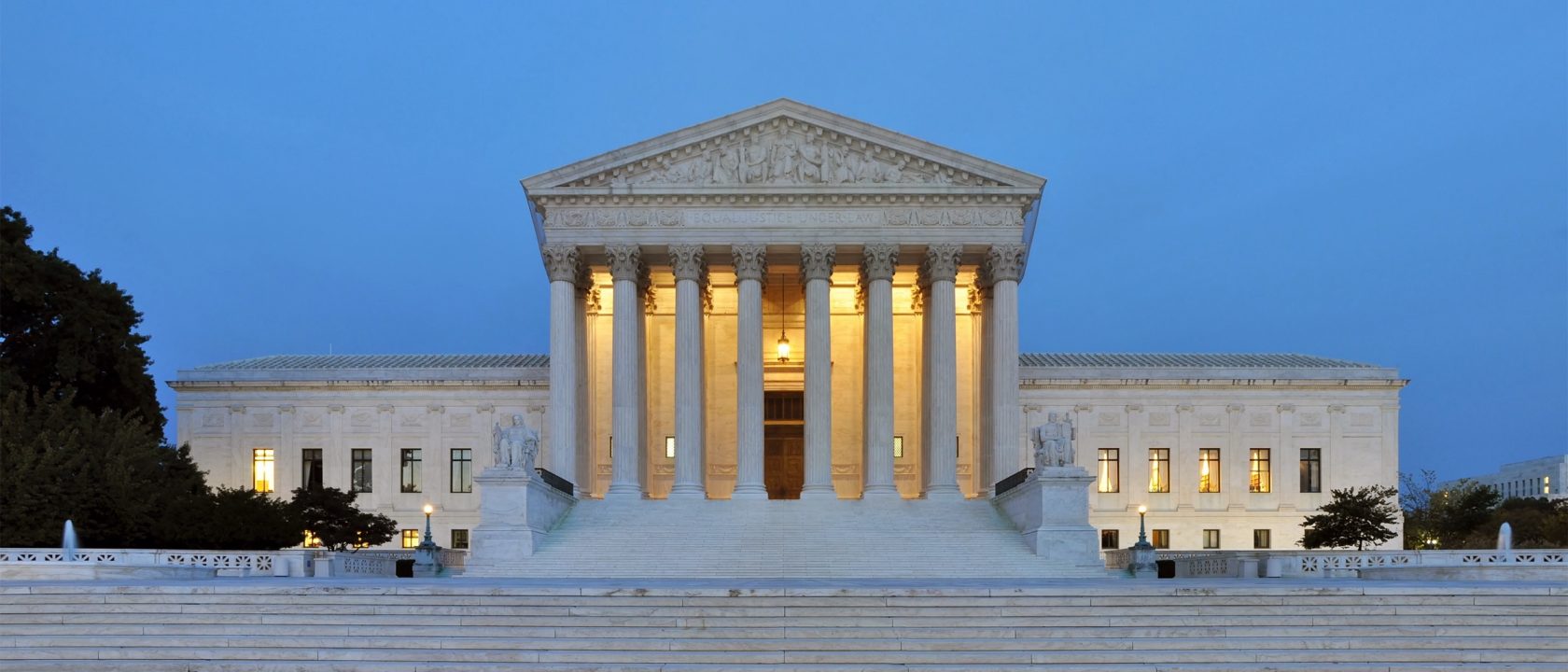
President Trump on Oct. 9 announced a three-member committee to investigate Federal Reserve Governor Lisa Cook, with a closed hearing at the White House set for Nov. 5. It is the administration’s second attempt to remove her, and the first since the Supreme Court ruled in Trump v. Cook on June 29 that her August 2025 firing was void because she never got notice or a chance to respond.
The new process is built to fit that ruling. Whether it succeeds will decide more than one seat: it will be the first real test of what “for cause” means for a Fed governor, and of how much protection the Federal Reserve Act’s removal clause gives the people who vote on interest rates.
1. What the Court decided
The case reached the justices as an application to lift a preliminary injunction that kept Cook in office. The Court denied it, 5–4. Chief Justice Roberts wrote for himself and Justices Sotomayor, Kagan, Kavanaugh and Jackson. Justices Thomas, Alito (joined by Gorsuch) and Barrett dissented.
The majority made three moves. First, it held that a president’s finding of cause under 12 U.S.C. § 242 is reviewable by courts, not left to his sole discretion. Second, it read “cause” as a substantial threshold, turning on “the seriousness of the alleged misconduct, and the extent of any nexus that may exist to the Governor’s professional duties.” Third, it held that the governors’ removal protection is consistent with the Constitution, placing the Fed in a line running back to the First and Second Banks of the United States.
But the Court decided the application on what it called a “narrow ground”: process. Because Cook was not given a chance to answer the charge, her removal was “erroneous and void” from the start.
At minimum, Cook was entitled to some explanation of the evidence at issue, some avenue for a response, and a deadline by which a response would be due.
EXCERPT · Trump v. Cook, 609 U.S. 528 (2026), opinion of the Court
2. What it left open
The ruling sets a floor for procedure, not a definition of cause. The opinion concedes that “cause” cannot be reduced to a precise set of rules and that “some close calls are inevitable.” It did not decide whether the mortgage allegations against Cook, which the Congressional Research Service describes as concerning conduct before she took office, clear that bar. It also declined to reach Cook’s separate constitutional due-process claim.
The opinion is also explicit that the required process is modest. A governor is not entitled “to an audience with the President or a full-blown judicial trial,” only notice of the charges and an opportunity to be heard. In the same passage, the Court cited a historical precedent: the “committee of inquiry” President Taft convened to decide whether he had cause to fire two members of the Board of General Appraisers.
A historical aside about a Taft-era committee of inquiry now reads like a template.
3. The new removal process
The timeline so far, according to SCOTUSblog and American Banker:
| Date | Step |
|---|---|
| Aug. 5, 2026 | White House Deputy Chief of Staff Dan Scavino notifies Cook the president is “considering” removal and gives her 21 days to respond. |
| Aug. 27, 2026 | Cook’s lawyer, Abbe Lowell, responds that the allegations are unfounded. |
| Oct. 7, 2026 | Presidential memorandum establishing the committee, posted on the White House website. |
| Oct. 9, 2026 | Committee announced: Kevin Hassett, Andrea Lucas and Keith Sonderling. |
| Nov. 5, 2026 | Closed hearing at the White House, capped at four hours and transcribed. |
| Nov. 10, 2026 | Deadline for Cook’s optional post-hearing statement. |
Hassett chairs the National Economic Council, Lucas chairs the Equal Employment Opportunity Commission and Sonderling is acting director of the Office of Government Ethics. Cook may submit evidence and witness statements and must appear for questioning. The committee will then report whether cause exists, and the decision rests with the president.
Cook’s lawyers, Abbe Lowell and Norm Eisen, said they have “grave doubts that this ‘hearing’ is a legitimate one that would conform to the law,” citing the president’s past statements, while adding that Cook “welcomes the opportunity to present the facts so she can clear her name.” That frames the likely next fight. The administration can now say it gave notice and a hearing. Cook can argue the outcome was predetermined and that the charges fail the “nexus” test.
4. What it means for the Warsh board
All seven Board seats are filled: Chair Kevin Warsh, Vice Chair Philip Jefferson, Vice Chair for Supervision Michelle Bowman and Governors Christopher Waller, Michael Barr, Lisa Cook and Jerome Powell, who remained a governor after his term as chair ended. All seven voted for the Sept. 16 rate increase. A vacancy created by Cook’s removal would give the president another nomination in a Board he has already partly reshaped.
The practical effect on rates is limited in the short run, since Cook is one vote of 12 and September’s decision was unanimous. The institutional effect is larger. The Court itself warned that without a real threshold, “any perceived or alleged misstep” could become “a ready pretext” for removal, weighing on a governor “as he decided what to say and how to vote.” The more likely reading is that any removal under the new process returns to court, this time on the substance of cause rather than procedure.
5. What happens next
- Oct. 27–28: FOMC meeting; Cook remains a voting member.
- Nov. 2: three days before the hearing, the deadline for Cook’s written position statement under the memorandum’s terms, as reported by American Banker.
- Nov. 5: closed hearing at the White House.
- Nov. 10: deadline for Cook’s post-hearing statement, after which the committee reports to the president.
- Trump v. Cook, No. 25A312, 609 U.S. 528 (2026) — Supreme Court of the United States · supremecourt.gov
- Trump announces committee investigation of Fed Governor Lisa Cook — SCOTUSblog · scotusblog.com
- Trump establishes committee to investigate Fed's Cook — American Banker · americanbanker.com
- Minutes of the FOMC, Sept. 15–16, 2026 (voting record) — Federal Reserve Board · federalreserve.gov
- Trump v. Cook and For-Cause Removal of Federal Reserve Governors (LSB11449) — Congressional Research Service · congress.gov
gov.house is independent and is not affiliated with any government body. This file is journalism, not investment, tax or legal advice. How we work: ethics & standards · Spotted an error? Corrections.