
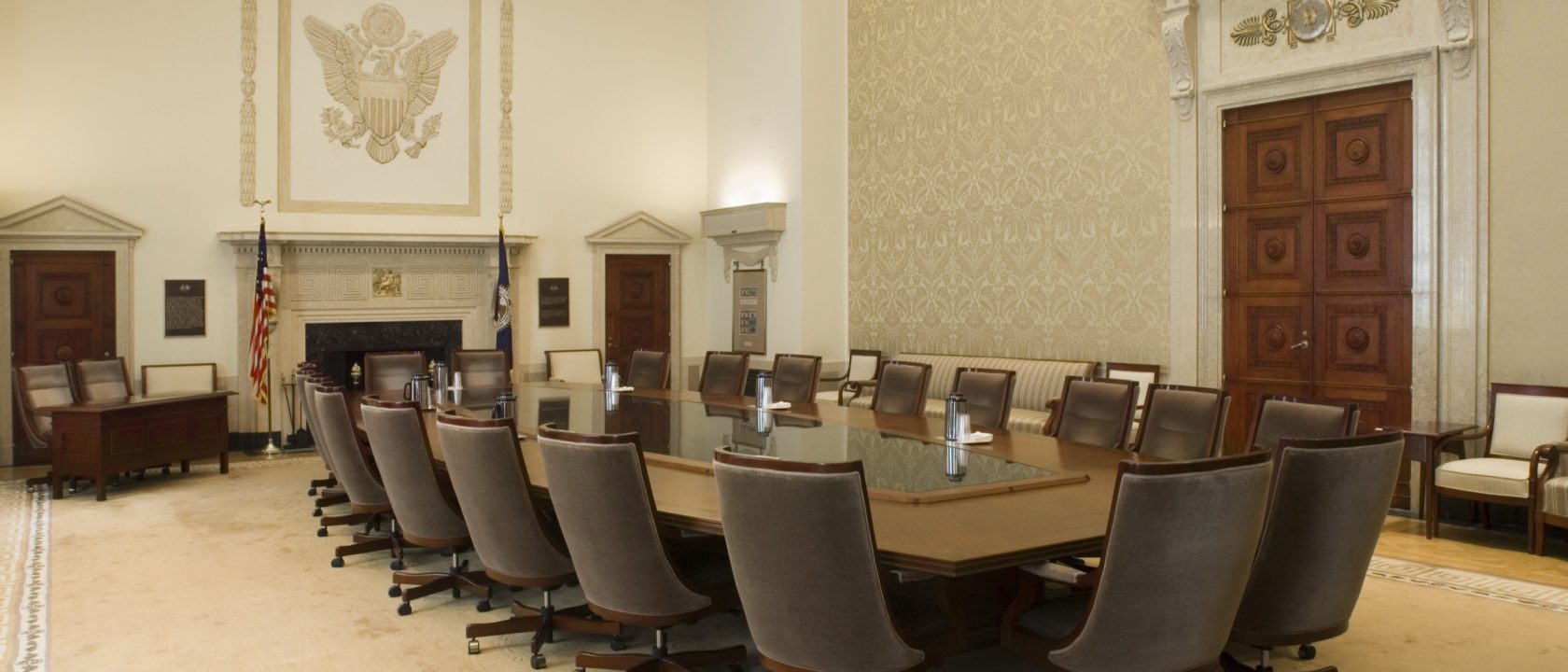
The Federal Open Market Committee meets Oct. 27–28 with the federal funds target at 3.75% to 4.00%, after a quarter-point increase on Sept. 16 that passed 12–0. It was the Fed’s first rate increase since July 2023 and the first of Kevin Warsh’s chairmanship.
The second decision is harder than the first. Since September the data have split: consumer prices rose 0.6% in September and 3.7% from a year earlier, while employers added just 29,000 jobs. The committee’s own projections pencil in one more hike by December. The open question for Oct. 28 is whether it comes now or waits for the December meeting, which brings a fresh dot plot.
1. What the committee has already said
The September statement was unusually short. It contains no sentence about the extent or timing of future moves. It closes with three flat declarations instead.
Inflation remains elevated. Today’s policy action will support a timelier return to the Committee’s 2 percent goal. The Committee will deliver price stability.
EXCERPT · FOMC statement, Sept. 16, 2026
The minutes, released Oct. 7, supplied the guidance the statement left out. Most participants judged that “another increase in the target range for the federal funds rate would likely be appropriate by year end,” while stressing that they “approached each meeting with an open mind.” By year end leaves two meetings, October and December. The minutes do not pick one.
The Summary of Economic Projections points the same way. Twelve of 18 participants put the year-end rate at 4.125%, one hike above today’s midpoint. Four put it at 4.375%, or two hikes. Two put it at 3.875%, meaning no further move.
2. The data since September
| Indicator | Latest reading | Released |
|---|---|---|
| CPI, all items, 12 months | 3.7% (Sept.) | Oct. 14 |
| CPI, all items, monthly | +0.6% (Sept.), after +0.4% in Aug. | Oct. 14 |
| Core CPI, 12 months | 2.6% (Sept.) | Oct. 14 |
| CPI energy index, 12 months | +20.4% (Sept.) | Oct. 14 |
| Core PCE price index, 12 months | 3.0% (Aug.) | Sept. 30 |
| Nonfarm payrolls | +29,000 (Sept.); July revised to −10,000 | Oct. 2 |
| Unemployment rate | 4.2% (Sept.) | Oct. 2 |
| Average hourly earnings, 12 months | +3.0% (Sept.) | Oct. 2 |
Read together, the numbers describe an energy shock sitting on top of a cooling job market. Headline inflation is being driven by fuel: the CPI energy index is up 20.4% over 12 months and gasoline 34.2%. Core CPI, at 2.6%, is far tamer. Core PCE, the measure Fed officials lean on to judge the underlying trend, ran 3.0% in August.
The jobs picture has moved the other way. In September, a majority of participants thought the labor market “had strengthened a bit recently.” Then the Oct. 2 report cut August payroll growth to 133,000 from 162,000, turned July into a loss of 10,000 jobs and showed unemployment at 4.2%, up from the 4.1% the staff cited in September.
The Beige Book, published Oct. 14, adds texture from the regional banks. “Higher oil prices permeated all District reports,” it said, while “most Districts described little or no net change in overall employment levels.”
3. The case for October, and the case for December
The argument for moving now is risk management. In September, many participants called a higher rate path “prudent on risk-management grounds,” insurance against energy costs and AI-driven demand feeding into inflation expectations. A 0.6% monthly CPI print is the kind of number that argument was built for. Governor Christopher Waller said in Istanbul on Oct. 8: “If the economic data continue to come in as expected, I anticipate additional hikes to support a timelier return of inflation to our 2 percent goal.”
The argument for waiting appears in the same speech. “The hikes do not need to come at consecutive meetings,” Waller said, “but they should be in place in an acceptable period of time.” New York Fed President John Williams, the committee’s vice chair, said on Oct. 13 that “it may be appropriate to have one more rate hike” and added, “It’s still mid-October,” according to Bloomberg News. Core CPI at 2.6% and payroll growth near zero give the patient camp its evidence, and December offers new projections to frame the move.
The committee has all but promised a hike by year end. It has not said which meeting.
Markets have swung with each release. CME FedWatch put the odds of an October hike near 24% on Oct. 13; they jumped above 50% in trading after the CPI report before easing later in the day, according to InvestmentNews and other market coverage. The more likely reading is a hold in October with firm language, followed by a hike in December. A move on Oct. 28 would still be consistent with everything the committee has said.
4. What to watch
- Oct. 15, 11:30 p.m. ET: Warsh in conversation with IMF Managing Director Kristalina Georgieva in Bangkok, per the Fed’s public calendar.
- Oct. 17: the pre-meeting communications blackout begins, so officials go quiet.
- Oct. 28, 2:00 p.m. ET: statement and implementation note; Warsh’s press conference follows at 2:30 p.m. There are no new projections at this meeting.
- Oct. 29, 8:30 a.m. ET: September personal income and PCE inflation from BEA, a day after the decision.
- Nov. 18 (expected): minutes of the October meeting, on the usual three-week lag.
- Dec. 8–9: the final meeting of 2026, with a new Summary of Economic Projections.
- Federal Reserve issues FOMC statement, Sept. 16, 2026 — Federal Reserve Board · federalreserve.gov
- Minutes of the FOMC, Sept. 15–16, 2026 — Federal Reserve Board · federalreserve.gov
- Summary of Economic Projections, Sept. 16, 2026 — Federal Reserve Board · federalreserve.gov
- Consumer Price Index, September 2026 — Bureau of Labor Statistics · bls.gov
- The Employment Situation, September 2026 — Bureau of Labor Statistics · bls.gov
- The Signaling Value of the Summary of Economic Projections (Waller, Oct. 8, 2026) — Federal Reserve Board · federalreserve.gov
gov.house is independent and is not affiliated with any government body. This file is journalism, not investment, tax or legal advice. How we work: ethics & standards · Spotted an error? Corrections.