
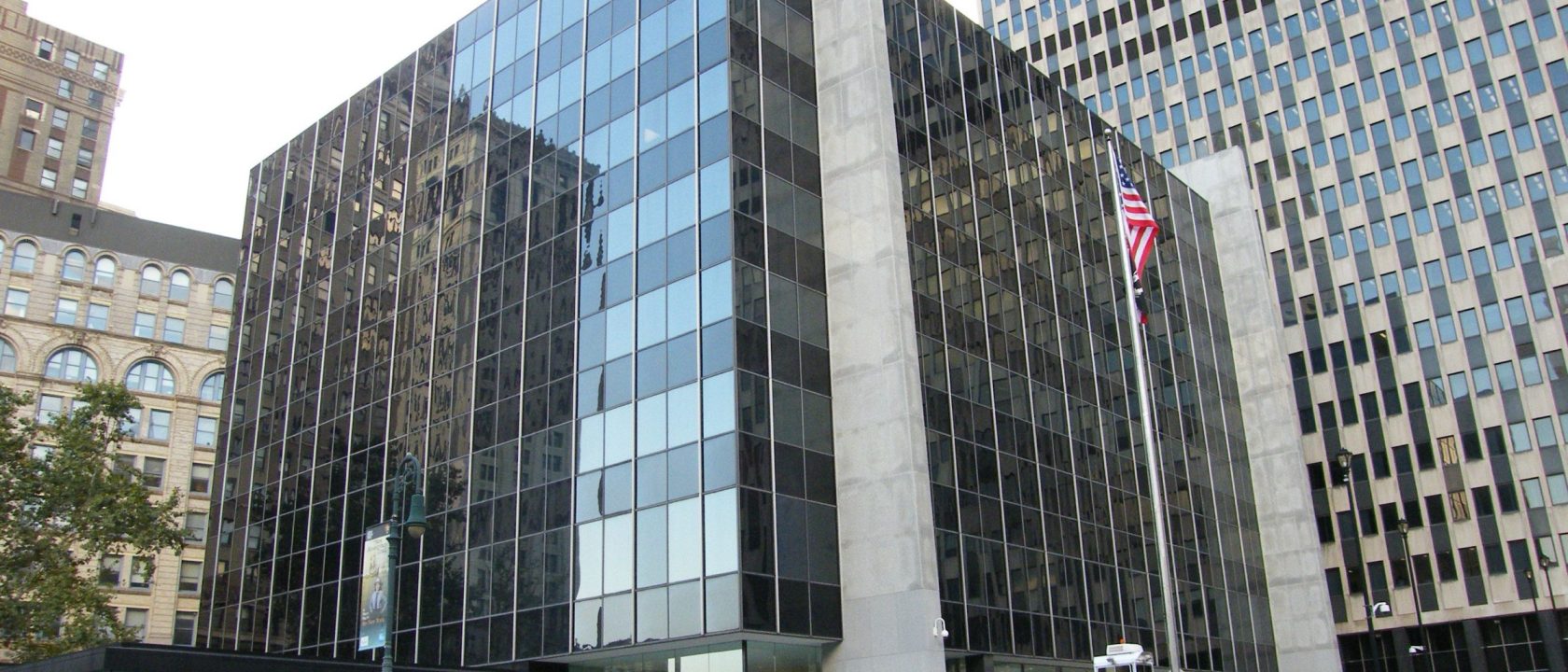
The parties in In re Section 301 Forced Labor Cases, No. 1:26-cv-03555, owe the US Court of International Trade a new round of briefs by Thursday, Oct. 16. The three-judge panel (Jennifer Choe-Groves, Timothy Reif and Lisa Wang) heard argument on Sept. 30 and, two days later, ordered both sides to answer a short list of written questions.
The case matters because these tariffs are now the widest wall the administration has. The Supreme Court held on Feb. 20 that IEEPA does not authorize tariffs, and the 150-day Section 122 surcharge that bridged the gap expired on July 24. The Section 301 duties of 10% or 12.5% on goods from 60 economies took over that same morning. If the panel sets them aside, the administration loses its broadest remaining tariff and importers start a second refund queue.
1. What USTR actually did
USTR opened 60 parallel investigations on March 12, 2026, each asking whether an economy fails to ban and enforce a ban on imports made with forced labor. On June 2 it found every one of them actionable. On July 23, following a presidential memorandum, it imposed duties on all products of each economy, effective 12:01 a.m. Eastern on July 24.
The rate formula is simple. Economies with a forced-labor import ban, a commitment to adopt one in an Agreement on Reciprocal Trade, or a partial regime get 10%. Everyone else gets 12.5%. Goods already hit by Section 232 tariffs, certain listed products and USMCA-qualifying imports are carved out, according to the Congressional Research Service.
In accordance with the specific direction of the President, the Trade Representative is taking actions in each of these investigations by imposing tariffs on all products of the investigated economy, with certain exemptions as provided in Annexes I and II to this notice (Notice).
EXCERPT · USTR Notice of Action, Docket Nos. USTR-2026-0265 and USTR-2026-0266, Summary
“All products of the investigated economy” is the phrase the plaintiffs have built their case around. A forced-labor problem is, in principle, about specific goods. The remedy here is economy-wide.
2. Who is suing, and on what theory
The consolidated case joins two groups of small importers with 25 states led by Oregon. The lead private case is Burlap and Barrel, Inc. and Collective Horology, LLC v. Greer, brought by the Liberty Justice Center; Learning Resources and hand2mind, veterans of the IEEPA fight, are also in. The core claim is procedural: USTR imposed a near-universal tariff without the country-specific findings, the link between each practice and each tariff, and the reasoned explanation the statute requires.
The Justice Department’s position is that USTR complied with the statute in full, acting at the President’s direction as Section 301 allows. Courts have historically given USTR wide latitude on Section 301 remedies, which is why the challengers lead with process rather than raw power.
3. The three questions
The Oct. 2 order asks the parties to address:
- Whether USTR was required to consider each investigated economy’s level of economic development.
- Which statutory provision USTR relied on to find the practices “unreasonable.”
- Whether the plaintiffs have standing to challenge the tariffs on all 60 economies.
The first two go to the merits. A single finding applied to Norway and Nicaragua alike invites the question of whether the law expects distinctions, and pinning USTR to one provision makes its reasoning easier to test.
The third question may matter most in practice. When the same court ruled on May 7 that the Section 122 surcharge was unlawful, it limited relief to three plaintiffs: the University of Washington, Burlap and Barrel and Basic Fun. The Federal Circuit stayed that ruling on June 11. A plaintiff that imports only from a handful of the 60 economies may win relief only for those. Put plainly, the government could lose on the merits and still keep collecting from most importers who did not sue.
The government could lose on the merits and still keep collecting from most importers who did not sue.
4. The EU detail
Counting tells part of the story. CRS counts 60 economies; the Congressional Budget Office says “more than 80 countries.” The gap is mostly the European Union, which USTR treated as one economy with 27 members. The EU gets a 10% rate net of MFN: if a product’s normal duty is under 10%, the Section 301 duty tops it up to 10%; if it is already 10% or more, the Section 301 duty is zero. Japan, South Korea and Switzerland get the same structure at 12.5%.
Reading the notice from Budapest, the striking line is that the EU was not found to lack a forced-labor ban. It was one of six economies (with Canada, Ecuador, Indonesia, Mexico and Pakistan) found to have failed “to effectively enforce” one. That is a judgment about enforcement quality, and it is exactly the sort of finding the panel’s first two questions probe.
| Date | Step |
|---|---|
| Mar. 12, 2026 | USTR opens 60 Section 301 investigations |
| June 2, 2026 | All 60 found actionable; tariffs proposed |
| July 24, 2026 | 10% / 12.5% duties take effect; Section 122 surcharge expires |
| Sept. 30, 2026 | Oral argument before three-judge CIT panel |
| Oct. 2, 2026 | Order for supplemental briefing |
| Oct. 16, 2026 | Supplemental briefs due |
5. What happens next
After Oct. 16, the panel has no deadline. Whoever loses will almost certainly go to the Federal Circuit, and a stay pending appeal is a live possibility given what happened in the Section 122 case.
Until then, the duties are due. As Troutman Pepper Locke noted on Oct. 12, there is no recovery mechanism for the Section 301 payments unless the determinations are set aside. Importers who want a claim to any future refund should talk to counsel now about preserving it, rather than waiting for a ruling that may not cover them.
- Notice of Actions in Section 301 Investigations ... Forced Labor (Docket Nos. USTR-2026-0265, -0266) — USTR · ustr.gov
- Learning Resources, Inc. v. Trump, No. 24-1287 (Feb. 20, 2026) — Supreme Court of the United States · supremecourt.gov
- Active Presidential Tariff Actions in 2026 (R49481) — Congressional Research Service · everycrsreport.com
- Court of International Trade to Hear Challenge to Sweeping Section 301 Tariffs — Liberty Justice Center · libertyjusticecenter.org
- Getting Duties Back: Where Recovery Stands Under IEEPA, Section 122, and Section 301 Forced Labor Tariffs — Troutman Pepper Locke · troutman.com
gov.house is independent and is not affiliated with any government body. This file is journalism, not investment, tax or legal advice. How we work: ethics & standards · Spotted an error? Corrections.