
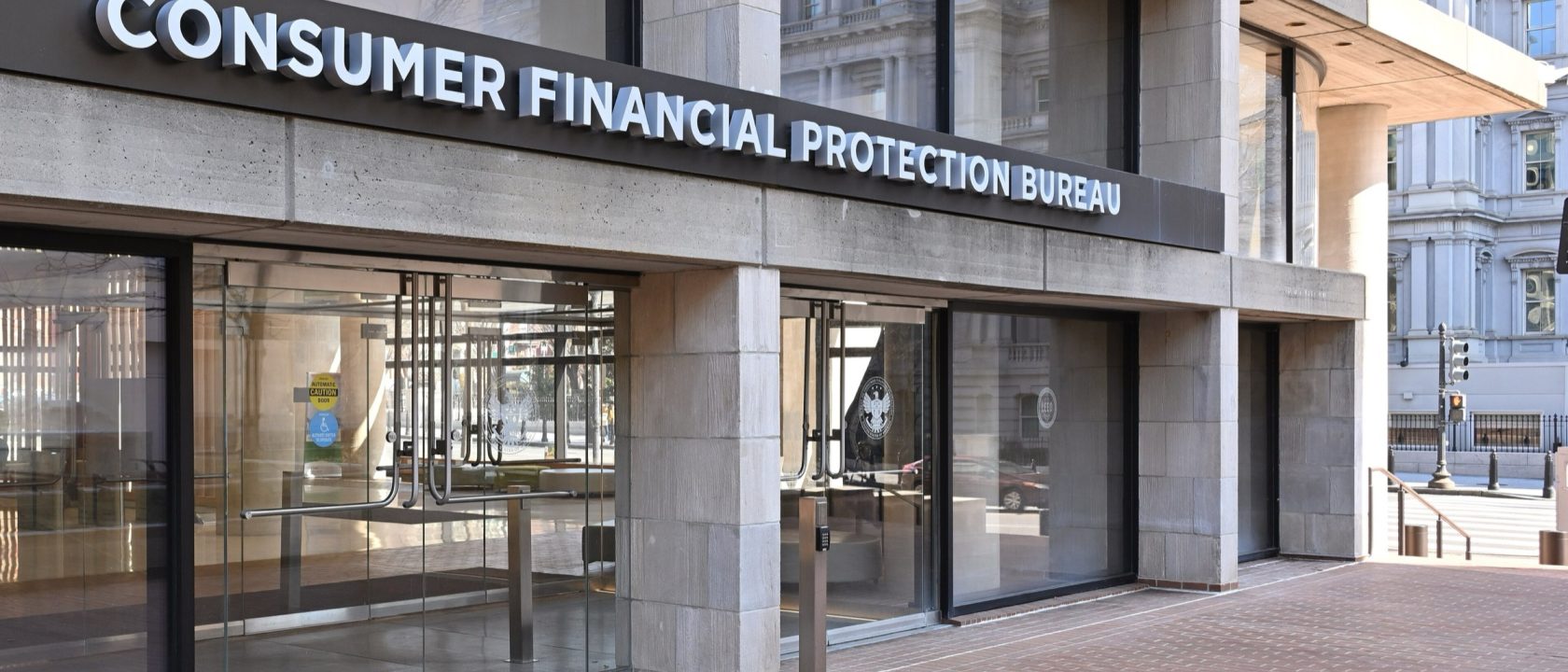
The administration’s legal theory for shutting off the Consumer Financial Protection Bureau’s money has now lost in three federal courts. On Sept. 25, Senior U.S. District Judge Ann Aiken of the District of Oregon granted partial summary judgment to a coalition of more than 20 states and the District of Columbia in State of New York v. Vought, No. 6:25-cv-02384-AA. She held that the bureau’s refusal to request funding from the Federal Reserve was unlawful under the Administrative Procedure Act and violated the separation of powers.
The ruling matters less for the money it moves this year than for the argument it buries. The theory, drawn from a November 2025 opinion of the Justice Department’s Office of Legal Counsel, was that the CFPB cannot draw on the Fed while the Fed is losing money. Judge Aiken read the statute the other way, as did two judges before her. That leaves the bureau’s critics with one route that does not run through a courtroom: change the law.
1. What the statute says
The CFPB is not funded through annual appropriations. Section 1017 of the Dodd-Frank Act, codified at 12 U.S.C. §5497, tells the Fed to transfer whatever the director deems necessary, up to a cap.
Each year (or quarter of such year), beginning on the designated transfer date, and each quarter thereafter, the Board of Governors shall transfer to the Bureau from the combined earnings of the Federal Reserve System, the amount determined by the Director to be reasonably necessary to carry out the authorities of the Bureau under Federal consumer financial law.
EXCERPT · 12 U.S.C. §5497(a)(1)
The cap is 6.5% of the Fed System’s 2009 operating expenses, adjusted annually. The fight is over two words. Since late 2022 the Fed has paid more in interest on bank reserves than it earns on its portfolio, booking the shortfall as a “deferred asset.” OLC concluded that “combined earnings” means profit, and with no profit there is nothing to transfer. Then-Acting Director Russell Vought adopted that reading and said the bureau would not request funds.
2. What Judge Aiken decided
The court held that “combined earnings” refers to the Fed’s gross revenues before expenses are deducted, not net income. It also held that while the director has discretion over how much to request, the duty to request funding sufficient to carry out the bureau’s statutory functions is not discretionary. Declining to ask at all, the court found, amounted to the executive branch overriding Congress’s power of the purse.
The remedy was narrower than the headlines. The court vacated Vought’s decisions and issued declaratory relief, but it declined to enjoin funding for fiscal 2026 because that fiscal year was nearly over. Practically, the order binds the current acting director, Mark Paoletta, who is serving in a caretaker role while Brian Johnson’s nomination for director awaits a Senate floor vote. The Senate Banking Committee advanced Johnson 13–11 on party lines on Sept. 17.
| Case | Court | Decision | Status |
|---|---|---|---|
| NTEU v. Vought | D.D.C. (Judge Amy Berman Jackson) | Dec. 30, 2025: OLC reading rejected | Appeal No. 25-5091 before en banc D.C. Circuit; limited remand ordered June 19, 2026 |
| Rise Economy v. Vought | N.D. Cal. (Judge Edward Davila) | March 2026: OLC reading rejected | On appeal to the Ninth Circuit |
| New York v. Vought | D. Or. (Judge Ann Aiken) | Sept. 25, 2026: partial summary judgment for the states | Decisions vacated; no FY2026 injunction |
3. The money has already been moving
The earlier D.C. ruling forced the issue months ago. On Jan. 9, 2026, the acting director requested $145 million from the Fed for the second quarter of fiscal 2026, stating that he disagreed with Judge Jackson’s reading of “combined earnings” but was acting “pursuant to that opinion and order.” So the Oregon decision does not restart a dormant agency. It removes the argument the administration had been preserving for appeal.
Whether it gets appealed is an open question. Ballard Spahr’s Consumer Finance Monitor, which tracks the litigation closely, reported that the CFPB has not appealed the Oregon ruling and called an appeal unlikely. The D.C. case, which also concerns layoffs and the bureau’s wind-down, remains before the en banc D.C. Circuit.
The ruling matters less for the money it moves this year than for the argument it buries.
4. Plan B is a statute
House Republicans have already moved to the legislative fix. On Sept. 16 the House Financial Services Committee approved H.R. 10184, the Consumer Financial Protection Accountability and Reform Act of 2026, by 28–21, with every Republican in favor and every Democrat opposed. The bill, introduced by Reps. Andy Barr (R-Ky.) and French Hill (R-Ark.), would end the Fed funding mechanism and put the bureau through regular appropriations, add a dedicated inspector general, and require a rulemaking to define “abusive” practices.
Supporters argue that a regulator with this much reach should answer to annual appropriations like most agencies. Opponents note that the Supreme Court upheld the current funding structure in 2024 in CFPB v. Community Financial Services Association, and that appropriations would let a future Congress shrink the bureau without repealing a single consumer law. A House floor vote is possible; 60 votes in the Senate is a different matter.
5. What to watch
- Fiscal 2027 transfers. FY2027 began Oct. 1. The first quarterly request under the new fiscal year will show whether the bureau asks for an operating budget or a caretaker minimum. The statute leaves the amount to the director.
- The appeal clock. When the federal government is a party, it generally has 60 days from judgment to file a notice of appeal, which points to late November.
- The Johnson vote. The nomination sits on the Senate Executive Calendar with no floor vote scheduled. A confirmed director would own the funding decision, and the litigation risk that comes with it.
- H.R. 10184 on the floor. A House vote would put the funding question to Congress directly.
- 12 U.S.C. §5497, Funding; penalties and fines — Legal Information Institute, Cornell Law School · law.cornell.edu
- AG Rayfield wins court order keeping the Consumer Financial Protection Bureau funded — Oregon Department of Justice · doj.state.or.us
- Third district court rejects OLC's interpretation of CFPB funding statute — Consumer Finance Monitor (Ballard Spahr) · consumerfinancemonitor.com
- H.R. 10184, Consumer Financial Protection Accountability and Reform Act of 2026, one-pager — House Financial Services Committee · financialservices.house.gov
- CFPB complies with court's funding order in NTEU v. Vought — Consumer Financial Services Law Monitor (Troutman) · consumerfinancialserviceslawmonitor.com
gov.house is independent and is not affiliated with any government body. This file is journalism, not investment, tax or legal advice. How we work: ethics & standards · Spotted an error? Corrections.