
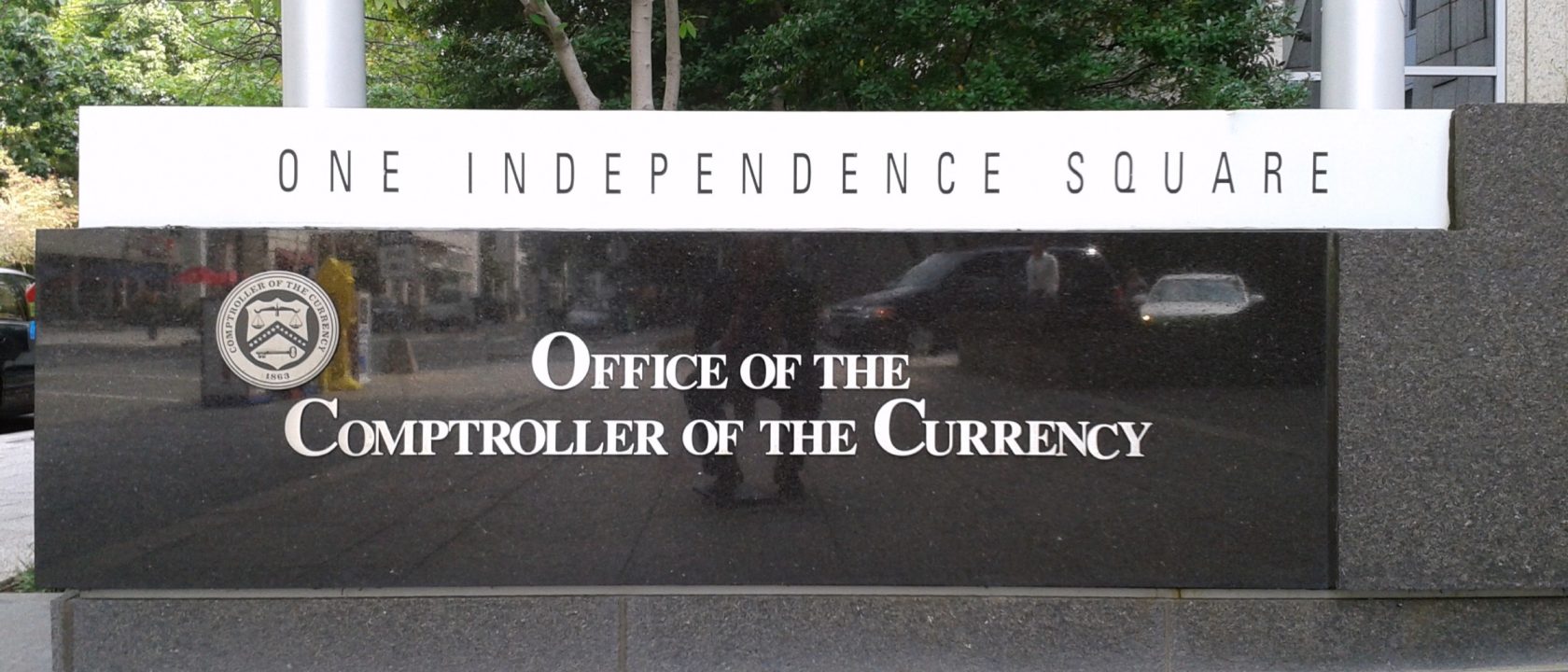
The GENIUS Act gave regulators one year to write the rules for payment stablecoins. That deadline, July 18, 2026, passed with almost nothing final. Three months later the Federal Register shows a long list of proposals from the Treasury, the OCC, the FDIC, the Federal Reserve, the NCUA and FinCEN, and exactly one binding rule: a Treasury interim final rule on how state regimes get certified.
The calendar does not care. The law takes effect on Jan. 18, 2027, whether or not the rules are done. For issuers, banks and exchanges, that means roughly three months to prepare for a framework whose details are still moving, and a regulator, the OCC, promising a final rule “by November.”
1. The date math
Section 20 of the Act, signed July 18, 2025, sets the effective date with a two-part test.
This Act, and the amendments made by this Act, shall take effect on the earlier of (1) the date that is 18 months after the date of enactment of this Act; or (2) the date that is 120 days after the date on which the primary Federal payment stablecoin regulators issue any final regulations implementing this Act.
EXCERPT · GENIUS Act, Pub. L. 119-27, Sec. 20
Eighteen months after enactment is Jan. 18, 2027. Counting back 120 days from that date lands on Sept. 20, 2026. Because no primary federal regulator issued a final rule before then, the second prong can no longer produce an earlier date. Jan. 18 is fixed. An OCC final rule in November would take effect into a law that is already live, not trigger it.
Separately, Section 13(a) required each primary federal regulator, the Treasury and state regulators to “promulgate regulations to carry out this Act” within one year of enactment. There is no penalty clause for missing it, which is why the miss produced press coverage and not litigation.
2. Where each rule stands
| Agency | Document | Published | Comments |
|---|---|---|---|
| OCC | Core issuer rule for OCC-supervised entities (91 FR 10202) | Mar. 2, 2026 | Closed May 1 |
| Treasury | “Substantially similar” principles for state regimes (91 FR 16844) | Apr. 3, 2026 | Closed June 2 |
| FDIC | Requirements for FDIC-supervised issuers (91 FR 18534) | Apr. 10, 2026 | Closed June 9 |
| FinCEN / OFAC | AML and sanctions programs for issuers (91 FR 18582) | Apr. 10, 2026 | Closed June 9 |
| NCUA | Issuer rule for credit union subsidiaries (91 FR 28956) | May 18, 2026 | Closed July 17 |
| Treasury | Issuance, offer and sale prohibitions under Sec. 3 (91 FR 53368) | Aug. 18, 2026 | Open until Oct. 19 |
| Federal Reserve | Rules for Board-supervised issuers and the tying ban (91 FR 61580) | Sept. 29, 2026 | Open until Nov. 30 |
| Treasury (SCRC) | Interim final rule: state certification forms and procedures (91 FR 61688) | Sept. 30, 2026 | Effective on publication; comments until Nov. 30 |
The order matters. The OCC’s rule governs the largest group of likely federal issuers, including nonbanks seeking a federal license, and its comment period closed in May. Comptroller Jonathan Gould said in August that the agency was “very intent on moving quickly and getting a final rule out by November so that we will be able to start processing applications within the new year.” The Fed’s proposal, by contrast, only arrived in late September and will not close for comment until the end of November, which makes a final Fed rule before Jan. 18 unlikely.
An OCC final rule in November would take effect into a law that is already live, not trigger it.
3. The first binding rule: the state lane
The Treasury’s Sept. 30 interim final rule sets up how the Stablecoin Certification Review Committee will approve or deny certifications from state regulators. That matters because the Act lets smaller issuers stay under state supervision if the state regime is “substantially similar” to the federal one. The ceiling is $10 billion: under Section 4(d), a state-qualified issuer whose stablecoin exceeds $10 billion in outstanding issuance must either transition to a federal framework within 360 days or stop issuing new coins until it falls back under the line.
States get time. Under Section 4(c), a state regulator must submit its initial certification no later than one year after the effective date, which puts that deadline at Jan. 18, 2028. The Treasury said it used an interim final rule so the forms would exist by the effective date, and that it intends to revise them after comments.
4. What Jan. 18 does and does not switch on
On the effective date, it becomes unlawful for anyone other than a permitted payment stablecoin issuer to issue a payment stablecoin in the United States (Sec. 3(a)). The ban on platforms offering or selling non-permitted stablecoins to U.S. persons comes later: Section 3(b) starts it three years after enactment, on July 18, 2028. The Treasury’s August proposal is the rulebook for that section, which is why its Oct. 19 comment deadline draws heavy industry attention.
Applicants caught in the gap get some cover. Section 5(f) lets regulators waive the Act’s requirements for up to 12 months from the effective date for applicants with pending applications. In practice, the first months of 2027 will run on application queues and waivers more than on finished rulebooks.
5. What to watch
- Oct. 19: comments due on the Treasury’s Section 3 issuance-and-sale proposal.
- November: the OCC’s stated target for its final rule. Watch whether the FDIC and NCUA finalize alongside it.
- Nov. 30: comments due on the Fed’s proposal and on the Treasury’s state-certification interim rule.
- Jan. 18, 2027: the GENIUS Act takes effect.
- Public Law 119-27, Guiding and Establishing National Innovation for U.S. Stablecoins Act (S. 1582) — GovInfo · govinfo.gov
- Forms and Procedures for Review of State Certifications by the Stablecoin Certification Review Committee, 2026-19966 — Federal Register · federalregister.gov
- GENIUS Act Regulations on Payment Stablecoin Issuance, Offer, and Sale, 2026-16796 — Federal Register · federalregister.gov
- Implementing the GENIUS Act for entities subject to the jurisdiction of the OCC, 2026-04089 — Federal Register · federalregister.gov
- Implementing the Federal Reserve Board's Responsibilities Under the GENIUS Act, 2026-19860 — Federal Register · federalregister.gov
- OCC races the clock to finish GENIUS Act stablecoin rules — PYMNTS · pymnts.com
gov.house is independent and is not affiliated with any government body. This file is journalism, not investment, tax or legal advice. How we work: ethics & standards · Spotted an error? Corrections.