
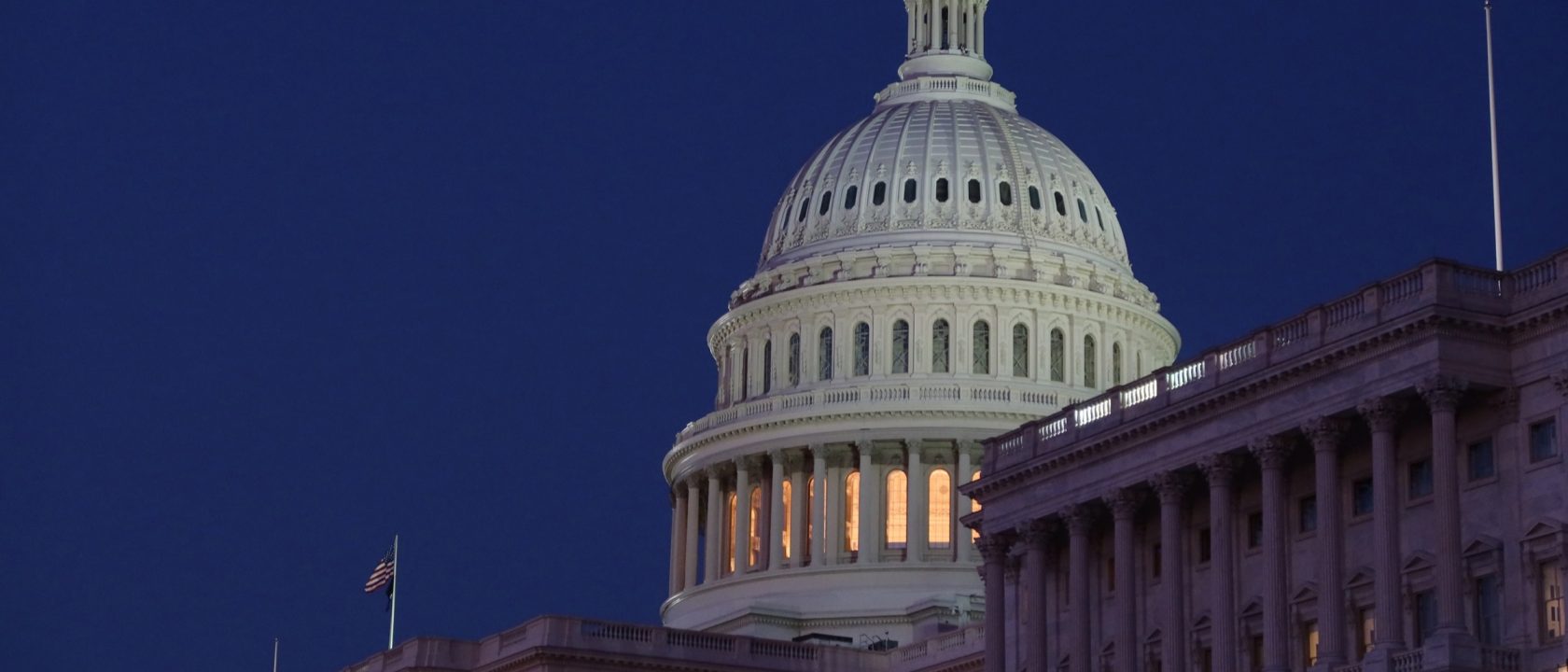
The federal government is running on a 72-day loan of time. The Continuing Appropriations and Extensions Act, 2027 (H.R. 6500, now P.L. 119-103) keeps every agency funded from October 1 through December 11, 2026. Congress set that end date on purpose: it falls five and a half weeks after the November 3 midterm elections.
That choice means the voters speak first and the appropriators finish later. Not one of the 12 regular FY2027 spending bills has been enacted. The House has passed three. The Senate Appropriations Committee has not reported any. Whatever happens on December 11 will be decided by a lame-duck Congress, some of whose members will already know they are leaving.
1. What the stopgap actually does
A continuing resolution does not set new budgets. It tells agencies to keep spending at roughly last year’s pace. The Congressional Research Service’s September 17 overview of the law puts it plainly:
Congress must enact regular appropriations bills for FY2027 or an additional CR prior to the expiration of this CR to avoid a funding gap beginning on December 12, 2026, that may result in a shutdown of affected government activities.
EXCERPT · CRS Report R49353, Overview of Continuing Appropriations for FY2027
CBO estimates that Division A provides an annualized $1.701 trillion in discretionary budget authority. The rate is based on FY2026 appropriations, with a list of “anomalies” that bend the formula for specific programs. Two stand out. Section 137 lets FEMA’s Disaster Relief Fund draw up to $26.37 billion during the CR, and an IRS anomaly keeps an $11.66 billion FY2026 rescission from being applied again, which CRS says would otherwise hinder the agency’s IT modernization plan.
The law is more than a CR. Division C is the Surface Transportation Extension Act of 2026 and Division D carries Veterans Affairs extenders. National Flood Insurance Program authority also rides on the December 11 date. That is why the deadline is bigger than appropriations alone.
2. How we got here
The path to the stopgap ran through two competing bills and a long August recess.
| Date (2026) | Action | Vote |
|---|---|---|
| July 21 | House passes H.R. 9770, a CR to December 4 | 220–205 |
| Aug. 2 | Senate Appropriations Chair Collins releases bipartisan alternative text running to December 11 | n/a |
| Aug. 8 | Senate passes that text as an amendment to H.R. 6500 | 90–6 |
| Sept. 1 | House agrees to the Senate version | 370–48 |
| Sept. 2 | President signs; becomes P.L. 119-103 | n/a |
The House accepted a later end date and a list of administration-requested anomalies in exchange for avoiding a pre-election fight. The 370-vote margin shows how little appetite either party had for a shutdown in campaign season.
3. Where the 12 bills stand
The House Appropriations Committee reported all 12 of its FY2027 bills, and the full House passed three: Agriculture, Military Construction-Veterans Affairs, and National Security-State. On the Senate side, CRS reports that the committee “had not reported its version of any FY2027 regular appropriations bills, and none had been considered by the Senate.”
The obstacle is the topline. Chair Susan Collins and Vice Chair Patty Murray have not announced agreement on total spending, and Murray disputed the subcommittee allocations Collins issued in June. The administration’s request for a $1.5 trillion defense budget sharpened the dispute, since Democrats have tied any defense increase to more domestic money. Without a shared topline, the Senate has no bills to bring to conference.
A stopgap that outlasts an election is a bet that the losers will be in a dealmaking mood.
4. Three ways December 11 can go
An omnibus or a series of minibuses. Congress packages most or all of the 12 bills, likely with health extenders and other expiring programs attached. This requires a topline deal within weeks, plus floor time in both chambers.
Another CR into 2027. Lawmakers punt again, to January or March, and hand the work to the 120th Congress. This is the path of least resistance, and it is the default if the election shifts control of either chamber, because an incoming majority has every reason to wait for its own gavels.
A hybrid. Full-year bills for the agencies where the House and Senate are close, such as Military Construction-VA and Agriculture, with a CR for the rest. Congress used this approach in November 2025, when the law that ended the FY2026 shutdown carried three full-year bills alongside a CR.
The more likely reading is that the outcome turns less on policy than on the November results. A party that keeps both chambers may prefer to finish FY2027 quickly and clear the decks. A party about to lose one may want to lock in its numbers before January. Either way, the shutdown risk is real but concentrated in the final week, when a single objection in the Senate can push a vote past midnight.
5. What to watch
- November 3: Midterm elections. The partisan balance sets the lame-duck incentives.
- After the election: Whether Collins and Murray announce a topline. No topline, no omnibus.
- December 11: The CR, surface transportation authority and NFIP authority all expire. A funding gap begins December 12 for any agency without a new law.
- December 31: A second cliff for health extenders and TANF funding, which often get folded into the December package.
- Overview of Continuing Appropriations for FY2027 (Division A of P.L. 119-103), R49353 — Congressional Research Service · everycrsreport.com
- H.R. 6500, Continuing Appropriations and Extensions Act, 2027 — Congress.gov · congress.gov
- Congressional Bill H.R. 6500 Signed into Law — The White House · whitehouse.gov
- Statement of Administration Policy: Senate Amendment to H.R. 6500 — Office of Management and Budget · whitehouse.gov
- Beyond the Midterms: Congress Faces Converging Year-End Deadlines — Holland & Knight · hklaw.com
gov.house is independent and is not affiliated with any government body. This file is journalism, not investment, tax or legal advice. How we work: ethics & standards · Spotted an error? Corrections.